
How to Keep Touchless Entry Systems Safe from Digital Threats
Combine Convenience & Cyber Security In Your Business
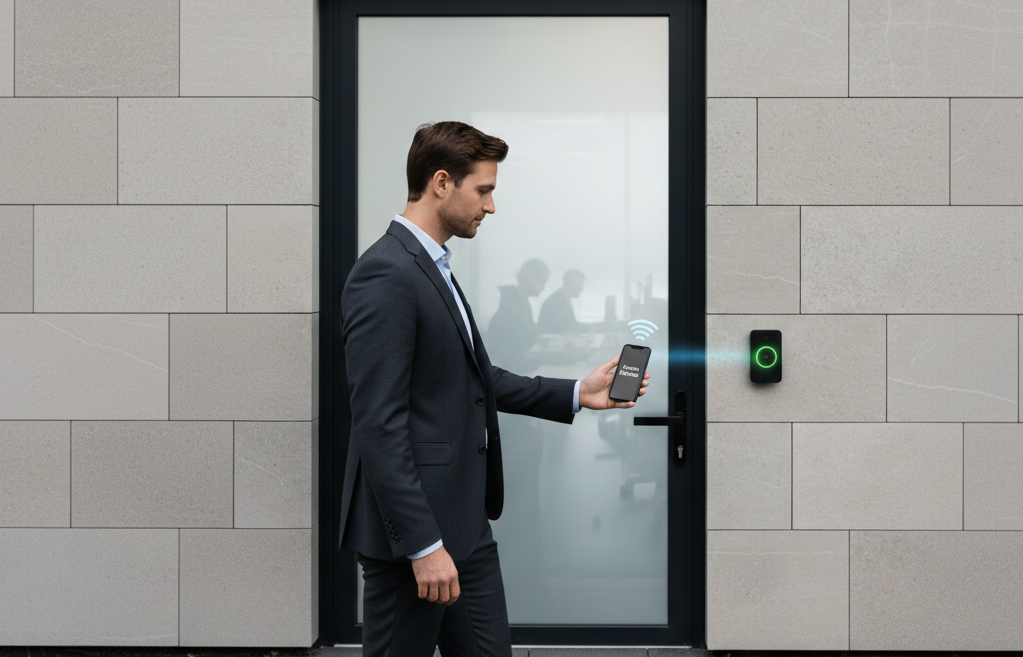
Touchless entry systems allow people to move through a commercial building quickly without stopping to swipe a card or enter a code. Mobile credentials, hands-free readers, and biometric access all reduce friction at the door. They also shift access control away from purely physical hardware and into software, credentials, and networks. That shift does not make these systems unsafe by default. But it does mean they need to be planned and managed like any other connected security platform.
What Cyber Risks Come With Touchless Entry Systems?
A traditional key only works if someone has it in hand. Digital credentials, on the other hand, can be copied, forwarded or misused from anywhere. Lost phones and shared PINs create new vulnerabilities. But the real risk lies in cloud-managed platforms that provide access beyond your property. While this is a huge convenience particularly for security teams, it means that bad actors could gain entry to your property without being near it. While this dissuades many people from upgrading to touchless entry, these risks can be averted with the right planning.
Start Off With Strong Encryption
When an employee presents a digital credential, the reader does not immediately “unlock the door.” It sends a digital message detailing who is requesting access, and to which door. One of the risks of a touchless entry system is people intercepting these signals going between touchless readers, door controllers and your access control software. With proper installation, those messages come with end-to-end encryption to eliminate immediate risks.
Without encryption, those same signals can travel in plain text or weakly protected formats, which creates opportunities for eavesdropping, credential harvesting, or replay attacks where a captured unlock command is reused later. Touchless entry systems should always use encrypted, time-limited tokens that expire quickly, which makes it far harder for an attacker to reuse what they capture.
Enhance Your Defenses With Multi-Factor Authentication
Multi-factor authentication makes stolen credentials far less useful. It does not need to slow down every entry point. Many businesses apply it only to higher-risk doors. A common example is a badge or mobile credential combined with a short PIN for a server room or cash handling area. Another is requiring app approval on a phone before a restricted door unlocks. Admin accounts should also use multi-factor authentication so a single compromised password doesn’t affect the entire building.
Identify Suspicious Activity Quickly With Access Logs
Access logs are one of the most important cybersecurity controls in touchless entry by providing visibility into how credentials are used. Detailed audit trails allow your team to spot anomalies such as repeated failed attempts, access outside approved hours, or credentials being used in unexpected locations.
If a side door opens after hours, logs can confirm if the activity was performed by an authorized user, with a misused credential, or from a compromised account. Access to this data helps you respond quickly to unauthorized activity.
Call Greeley Lock & Key or fill out our online contact form to review your touchless entry system. We’ll help you strengthen cybersecurity, tighten access permissions, and add the right protections for your building.